
“Don’t worry, keep at it and we’ll get there eventually.”
Most B2B founders have said this at least once while reviewing a blog post, landing page, video script, or campaign draft.
It sounds reasonable at first. But when your content takes one too many rounds of revision to finally work, it’s usually a sign of a deeper issue: starting work on it before the thinking is clear.
It’s a trap that content creators can fall into as well, myself included previously. There were some projects where we would fly by the seat of our pants and keep working at the drafts until the story finally emerged, resulting in:
- Endless revisions
- Content that feels busy but unfocused
- Doing more work without better results
This problem can affect anyone who uses content to communicate, like founders, marketers, sales leaders, product teams, and more.
The Real Reason Content Takes So Many Revisions
Most teams assume clarity can emerge during content creation, and in some cases, there are indeed some key points that only emerge after one or two drafts.
But in reality, save for some unavoidable teething issues, having clarity on what the content needs to do and who it targets can nip most problems before anyone starts drafting, designing, recording, or prompting AI tools.
When teams skip this step, it results in multiple rounds of adding more information, repeated tweaks, and reworking structure after the fact. The content eventually sounds fine, but it rarely lands as strongly as it should and wastes time on more revisions than needed. This is captured quite well in Bryan A. Garner’s HBR Guide to Better Business Writing:
“Simply thinking this out as you write means you’ll run into trouble because you won’t really know yet what you’re hoping your reader will think or do. You’ll flail about, gradually clarifying your point as you make several runs at it. In the end, after multiple attempts, you may finally figure out what you have to say, but you probably won’t say it in a way that your reader can follow.”
Some of my earlier works that didn’t fit neatly into straightforward educational content ended up taking a similar winding development style. When I was starting out, I would start by collecting as much information as possible, THEN try to think of what made sense for the reader, and then keep writing and rewriting until a story emerged.
While the end result was usually satisfactory, I would end up wasting a lot of time I would have otherwise saved if I had just planned what I wanted to say in the beginning.
Reduce the Number of Revisions by Writing Down the Three Key Points
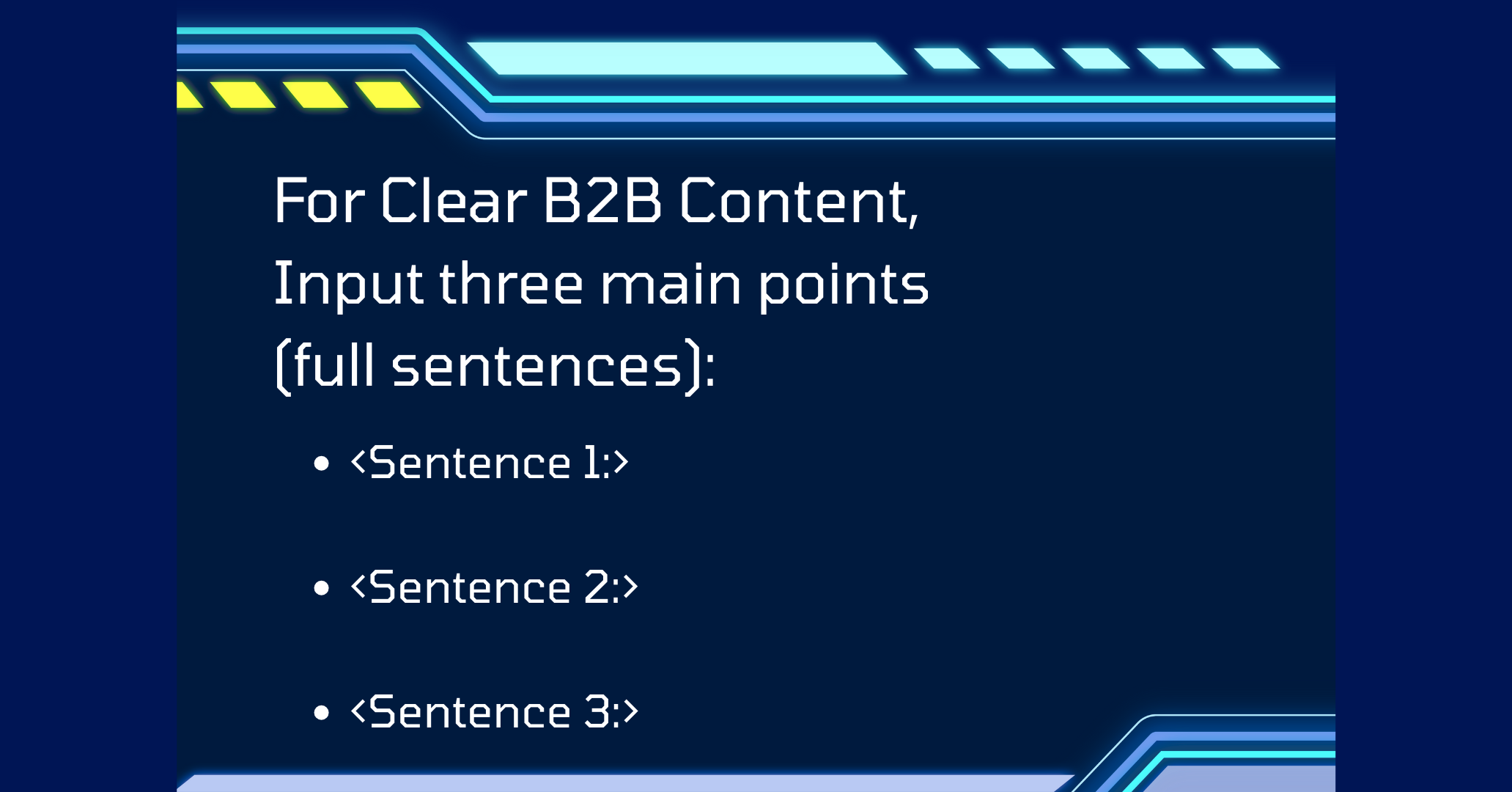
Following up on what we wrote last month, I want to share another piece of advice that helped our content development too: writing down our three main points as full sentences for any piece of content that we’re making.
Bryan A. Garner’s tip to improve clarity and minimise revisions is to:
“Write down your three main points in full sentences, and spell out your logic as clearly as you can. This forces you to think through your reasons for the action you want the reader to take, like recommending a vendor or pitching an offer to a client, strengthening your case.”
I personally wish that I had followed this advice sooner in my B2B content marketing career. Ever since I started applying this technique, I’ve saved three times the time I usually take when developing content. I apply this technique by taking the time to draft the 3-sentence storyline even before I start the research process. Here’s an example of a thesis statement I built for this telco SaaS article:
- Service satisfaction is not a sufficient condition for customer loyalty: Despite high service satisfaction, only 30% of surveyed customers are truly loyal.
- Customers see reliability and affordability as table stakes.
- Customers value network reliability (69%) and price (68%) when choosing mobile service providers.
- Women and Gen Z highly value price (women - 69% and Gen Z - 65%). Network reliability is still consistently in the top 2 factors.
- But younger people are likely to switch for higher quality experiences and are open to newer and better digital experiences, creating an opening that US telcos can use to win more market share.
Building on this example and our earlier ‘So What?’ test, this step forces you to answer questions many teams leave implicit:
- Who are we creating this content for?
- What action do we want them to take?
- What information should we provide them with in order to take that action?
- What objections could they have?
When these answers are clear, execution becomes straightforward, whether you’re building a blog post, social media post, video, or any other piece of B2B content.
In the above example, we were writing for telco CEOs in the USA who could benefit from new findings from our client’s survey that they did back in 2025. The goal was to establish our client as a thought leader and expert in telco customer experience and customer service, so quickly and cleanly pointing out new customer insights that could benefit telco campaigns was a must. In this case, the final point can help to validate the marketing direction that their telcos could be taking or help them to adjust their campaigns based on these survey insights.
This helps even if you’re using AI content development tools. Considering that AI tools can only work with what their prompts provide, providing them with a clear storyline and sufficient context will help them generate more relevant research and a better skeleton that you can then use for your final product. For the record, we do not recommend fully depending on AI for the entire project. Readers are now getting better at spotting an AI article’s tell-tale signs.
In Summary
Whether you’re a B2B founder, marketer, or content lead, strong B2B content starts the same way:
- Be clear on who the content is for.
- Decide what you want them to understand or do.
- Articulate your key points in three sentences before execution begins.
Do this well and you’ll reduce revision cycles, create content your customers will respond to, and last but not least, spend less time fixing things after the fact.
I hope you find this helpful, and stay tuned for more tips on creating great B2B content here at Nila Studios!
